Backlinks are one of the most important factors in SEO. A strong profile improves visibility and credibility, while low-quality links can harm rankings. Regular backlink audit provides a clear view of every link to your site, showing which ones help and which cause problems. Starting a new site, recovering from a penalty, or aiming for growth all require knowing when to audit and when to involve a professional.
What Is a Backlink Audit?
In simple terms, a backlink audit is a full health check-up for all the links pointing to your website.
You utilize specialized tools to check each link and ask three major questions.
- Is this link good? (Does it come from a trusted, relevant site and boost your authority?)
- Is this link bad? (Is it spammy, toxic, or from a suspicious website that could hurt your rankings?)
- Is this link broken? (Is it pointing to a missing page, wasting potential SEO value?)
The goal is not just to identify issues, but also to clean up your link profile, shield your site from Google penalties, and ensure that your future link-building efforts are built on a solid, trustworthy foundation.
Why Backlink Audits Matter
Even the best content and on-page SEO will be ineffective if your backlink profile is crowded with bad links. Here’s why audits are not negotiable:
1. Avoid Getting Penalized
Google is always updating its algorithm to reward sites that earn links naturally and punish those that try to cheat. If your site is covered in spammy, irrelevant, or outright purchased links, you’re a target. A backlink audit finds those links before Google does, saving you from a penalty that can tank your traffic for months.
2. Recover From Ranking Drops
If your traffic suddenly plummets for no clear reason, toxic backlinks are often the cause. Google may be penalizing your site for spammy or manipulative links.
A backlink audit cuts through the guesswork. It finds those harmful links so you can remove or disavow them. Instead of hoping your rankings come back, you get a clear plan to fix the problem and recover your visibility.
3. Protect Your Reputation
Who links to you tells a lot about your brand. What does your presence among low-quality, spammy websites say about you? It makes you appear guilty by association.
A clean backlink profile consisting of links from reputable sites increases not just Google’s faith in you, but also that of your consumers.
4. Get More From Your SEO Budget
Why waste time and money building new links on top of a rotten foundation? Bad links dilute the power of your good ones. An audit cuts out the dead weight, ensuring that every new link you build has a much bigger impact on your rankings and traffic.
It’s about making your entire SEO effort more effective and getting a better return on your investment.
When Should You Run a Backlink Audit?
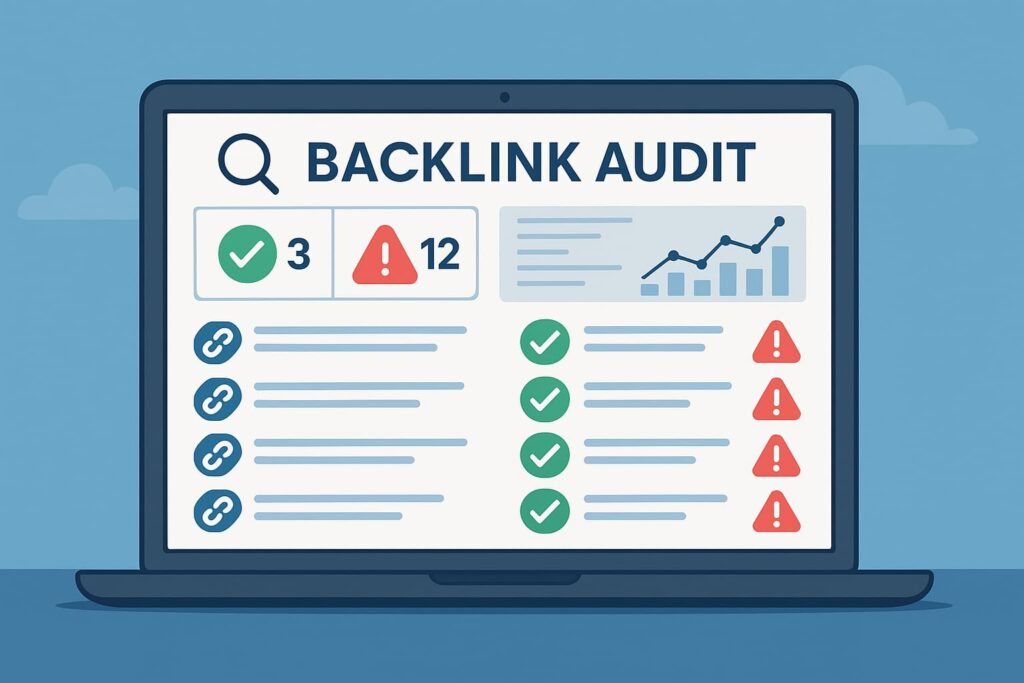
Backlink audits don’t need to happen every month, but certain situations make them critical for protecting rankings and preventing long-term damage.
After Buying a Domain
Purchasing an existing domain for branding, SEO value, or rebranding purposes can come with hidden baggage. Previous owners may have used link schemes, joined private blog networks (PBNs), or attracted spammy backlinks that still remain.
Without running an audit, these toxic links can hurt your new project before it even starts. A thorough review ensures you are not inheriting penalties or credibility issues tied to the domain’s history.
Post-Google Penalty or Ranking Drop
If your site experiences a sudden loss in rankings or traffic, backlinks are often the cause. Google penalties, whether algorithmic or manual, are frequently linked to unnatural link patterns. A backlink audit can uncover the problem areas and highlight issues such as:
- Over-optimized anchor text,
- Irrelevant or low-quality links,
- A sudden influx of suspicious backlinks.
By spotting these risks quickly, you can prepare a disavow file, request link removals, and begin recovery steps with more confidence.
Before Scaling Link Building
Many businesses start new link-building campaigns without first evaluating how well their existing profile is doing. Adding more links might make problems worse if the foundation is poor. A pre-link-building audit ensures that harmful links are removed first and provides a clean baseline.
It also allows you to see which sorts of backlinks are already producing the best results, driving better outreach efforts for future development.
Quarterly or Biannually for Active Sites
In competitive industries, backlink audits work best as routine maintenance. Running an audit every three to six months helps keep your SEO profile in good shape.
This schedule allows you to:
- Catch and remove spammy links before they accumulate,
- Spot new linking opportunities,
- Track how your backlink profile evolves alongside business growth.
Following a Negative SEO Attack
Negative SEO is a practice used by rivals in various sectors to try to lower your results. This involves spamming your website with numerous dangerous links from toxic or unrelated domains. In these situations, a backlink audit is crucial since it aids in early attack detection, toxic link removal through disavowal, and avoiding long-term ranking harm.
DIY Backlink Audits vs. Professional Services
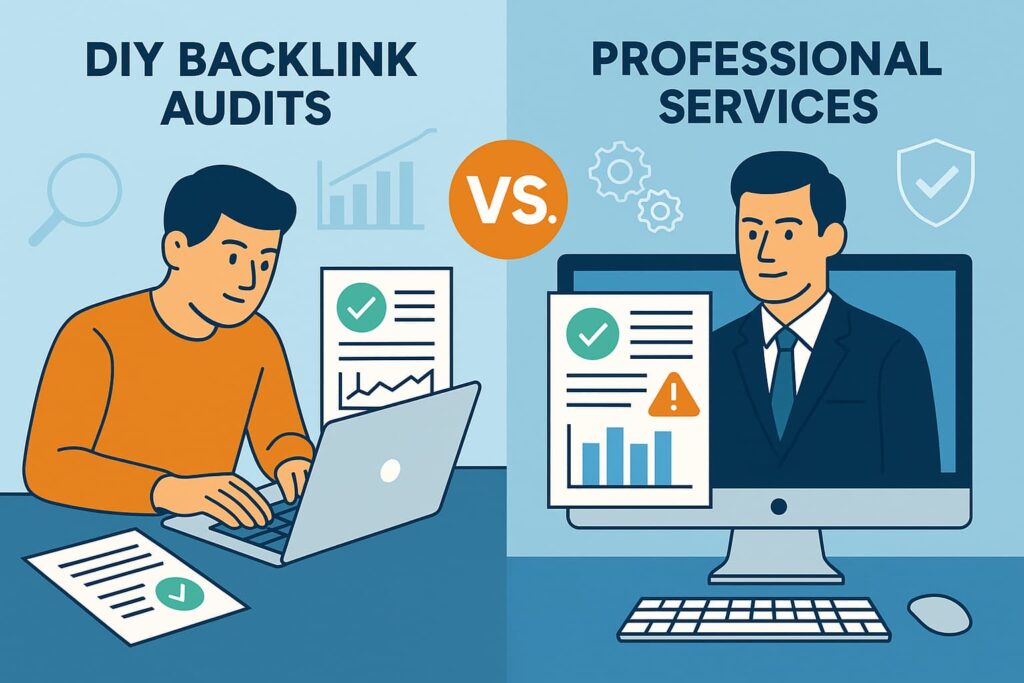
When it comes to backlink audits, you have two main options. Some website owners prefer to handle the process themselves using available SEO tools, while others turn to experienced professionals who specialize in uncovering and resolving complex backlink issues.
Both approaches have their benefits and drawbacks, and the right choice often depends on your website’s size, the stakes involved, and how much time or expertise you can dedicate to the task.
Doing It Yourself
Most marketers can run a basic audit using SEO tools. You’ll be able to spot clear red flags such as irrelevant links, spammy directories, or links from foreign sites with no context. DIY audits are cost-effective, but they come with limitations.
Professional Services
A professional backlink audit goes deeper. Experts combine multiple tools, advanced filters, and manual review to catch issues that automated software often misses. Professional audits usually include:
- Comprehensive link classification (good, suspicious, harmful).
- Disavow file preparation for Google Search Console.
- Manual outreach recommendations to remove bad links.
- Actionable growth strategy based on competitive benchmarks.
If you run a high-value domain, rely significantly on organic traffic, or work in a competitive market, professional services are well worth the price.
Companies such as 3XE Digital provide advanced link audits and backlink removal services that go beyond conventional assessments. Their approach consists of monitoring your backlink profile, assessing anchor text, reviewing link gaps, and eliminating problematic links using outreach and disavow files.
Signs You Need Professional Help
Running a backlink audit on your own may be effective for a small site, but as your website expands or the hazards increase, depending only on DIY inspections might backfire. There are strong indications that the issue requires expert intervention in order to avoid blunders that might affect your performance.
Declining search rankings
If your traffic is steadily dropping and you can’t find the reason, your backlink profile may be to blame. Experienced specialists can identify harmful patterns and links that most basic tools miss.
Manual penalty from Google
Getting manual action for unnatural links is a big problem. Recovering from it requires proper documentation, the removal of damaging links, and filing a reconsideration request. Professionals understand how to manage the process appropriately.
Audits that are too large to manage
Reviewing thousands of backlinks manually is slow and complicated. It’s easy to remove the wrong links or ignore the dangerous ones. Experts know how to evaluate link quality with accuracy and reduce the risk of mistakes.
High-revenue websites
For businesses that rely heavily on organic search traffic, one wrong move can cost thousands. A professional audit provides confidence and protection for websites where revenue depends on search visibility.
Preparing for major changes
Rebranding, launching a campaign, or relocating your website to a new domain necessitates a clean slate. Professional audits guarantee that existing link concerns are not carried over, providing your new approach with a strong foundation.
Choosing the Right Backlink Audit Service
Not all services are equal. When evaluating providers, look for:
- Experience with your industry (e.g., SaaS, e-commerce, news sites).
- Transparent reporting without jargon.
- Use of numerous trustworthy tools to cross-check results.
- Clear future actions, including disavowal, outreach, and growth potential.
- Proven case studies or testimonials.
Professional audits may cost anywhere from a few hundred to several thousand dollars, depending on scope, but the investment pays off in long-term stability and growth.
How Often to Audit Backlinks
Let’s be honest, checking your backlinks isn’t a “set it and forget it” kind of task. How often you need to do it depends on your site’s size, how competitive your field is, and how fast your link profile is growing. While keeping an eye on things with tools is good, a proper deep clean needs a schedule.
Here’s a straightforward breakdown:
- For New Websites: Check every 3 to 6 months. Even if you’re not building links yet, new sites can attract spammy links from scrapers or shady directories out of nowhere. An early audit helps you build a healthy profile from the start.
- For Small Businesses: A thorough audit twice a year is usually enough. If you’re not gaining links rapidly, this check-up helps you spot any spam that slipped in and keeps your profile clean without constant work.
- For Competitive or High-Stakes Sites: If you’re in finance, e-commerce, or SaaS, you’re a target. You need to audit at least quarterly. In these fields, competitors might try “negative SEO” attacks, and a single penalty is too costly. Frequent checks are your best defense.
You should also run an immediate backlink audit in certain situations. If you’re preparing to launch a major link-building campaign, it’s important to start with a clean foundation. The same applies when rebranding or moving your site to a new domain, as you don’t want old link issues to carry over.
Another clear signal is when your traffic suddenly drops without explanation—backlinks are often the hidden cause.
By following a schedule that matches your site’s needs, you prevent small issues from escalating into major SEO problems.
Conclusion
A backlink audit is more than simply a technical SEO procedure; it’s a strategic protection for your brand’s visibility and credibility. While DIY solutions are effective for small sites, businesses that rely on organic traffic should seriously consider professional services. Knowing when to take that step might be the difference between steady progress and costly setbacks.
FAQ
Q: Can a backlink audit remove a Google penalty?
A: Yes. An audit finds harmful links, prepares a disavow file, and may involve asking site owners to remove bad links. This cleanup is required before submitting a reconsideration request.
Q: How is a backlink audit different from a full site audit?
A: A backlink audit focuses on links pointing to your site. A full site audit reviews your own website, including technical setup, content, speed, and structure. Both are important for a complete SEO strategy.
Q: How long does an audit usually take?
A: For a small site, you might knock out a basic check in an afternoon. But for a large site with thousands of backlinks? A professional, thorough audit can take several days to get through everything properly.
Q: So, how much does it cost?
A: It really depends. You can find basic audits starting in the hundreds of dollars. For big, complex websites where a lot of money is on the line, a deep-dive analysis can cost several thousand dollars. You generally get what you pay for in terms of depth and expertise.
Q: Can I just use free tools?
A: You can start with free tools like Google Search Console, and it’s better than nothing! But for a real understanding, paid tools like Ahrefs or Semrush are pretty much essential. They give you a much more complete picture and find links that the free tools will miss.